


Is hostilities surrounding Iran intensified last week, Azerbaijan has emerged as a potential target in the escalating conflict.
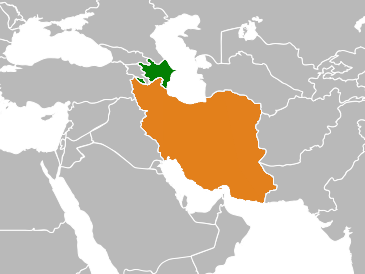
Reports indicate that an unmanned aerial vehicle (UAV) struck the terminal building of Nakhchivan Airport in the Azerbaijani exclave on Thursday, while another crashed near a school in the village of Shakarabad, injuring four civilians. Baku confirmed that four UAVs from the Iranian armed forces were launched toward the region—one was intercepted by Azerbaijani forces, while the others successfully reached their destinations, highlighting vulnerabilities in Azerbaijan’s air defenses.
This incident marks a significant and unprecedented escalation in relations between Iran and Azerbaijan, driven largely by the ongoing U.S.-Israeli military campaign against Iran. The airport is located approximately ten kilometers from the Iranian border, and the exclave, already isolated due to the suspension of bus services through Iran earlier, has now lost its last link to the Azerbaijani mainland—air travel.
Azerbaijan’s President Ilham Aliyev condemned the drone strike as “an act of terror.” In response, Iran’s foreign ministry and military leadership denied any involvement, asserting that Iranian forces respect the sovereignty of all nations. This assertion is particularly relevant given that both Azerbaijan and Iran are predominantly Shia Muslim countries—a factor that is supposed to foster unity rather than division.
Despite of the fact that the precise UAV launch site was not established as well as it is unclear who was indeed perpetrating these acts, their strategic goal is pretty clear — to drag Azerbaijan into the conflict. And this scenario doesn’t seem unlikely — there are quite a few benefits that the Azeri can get by joining the US-Israeli war. Firstly, it’ll degrade one of the most serious competitors in the region, allowing for greater expansion. Secondly, it will bring enough political points to Aliyev to tighten control within Azerbaijan even more by increasing his popularity as a successful military leader — just like after the conflict with Armenia a few years ago.
Also, there is a bigger picture unfolding — Azerbaijan joining the war will send a clear signal to the whole world that the Muslim world is far from unity, and can be dismantled by even the slightest economic benefit.
On the other hand, the truth is that neither Baku nor Tehran has a genuine interest in escalation. Iran is fighting for its survival on multiple fronts. The last thing its remaining military leadership needs is an Israel-led crusade on it with most of the ground operation commenced by other Muslims.
For Azerbaijan, the stakes are high: Aliyev understands that military successes against Armenia may not translate into victories against a nation capable of inflicting significant economic damage without direct military engagement. Furthermore, diplomatic support from U.S. does not equate to reliable security guarantees.
The longer-term picture is far less reassuring. The drone strike on Nakhchivan did not occur in a vacuum. It came just days after the United States and Israel launched coordinated strikes on Tehran, killing Iran’s Supreme Leader Ayatollah Ali Khamenei and plunging the region into chaos.
The broader implications of this situation are concerning. The drone strike on Nakhchivan did not occur in isolation; it followed closely on the heels of coordinated U.S. and Israeli strikes on Tehran that resulted in the death of Iran’s Supreme Leader Ayatollah Ali Khamenei, plunging the region into further uncertainty. As tensions rise, both nations must navigate a precarious landscape fraught with potential consequences for their economies and regional stability.
It remains uncertain what will happen next. The strategy, if it ever existed, seems to have concluded with the assassination of Iran’s leader. There appears to be no clear plan for handling the aftermath of the war or the subsequent stages of combat. Additionally, there is a lack of measures to manage potential repercussions, including American casualties, and to avert an escalation that could involve neighboring countries—many of which, such as Azerbaijan, are allies of the United States—in a conflict they did not seek.
 POLITOSCOPE
Leave a comment