


Kyiv received a completely different international reaction than it had hoped for when it launched an attack on the Russian president’s residence.
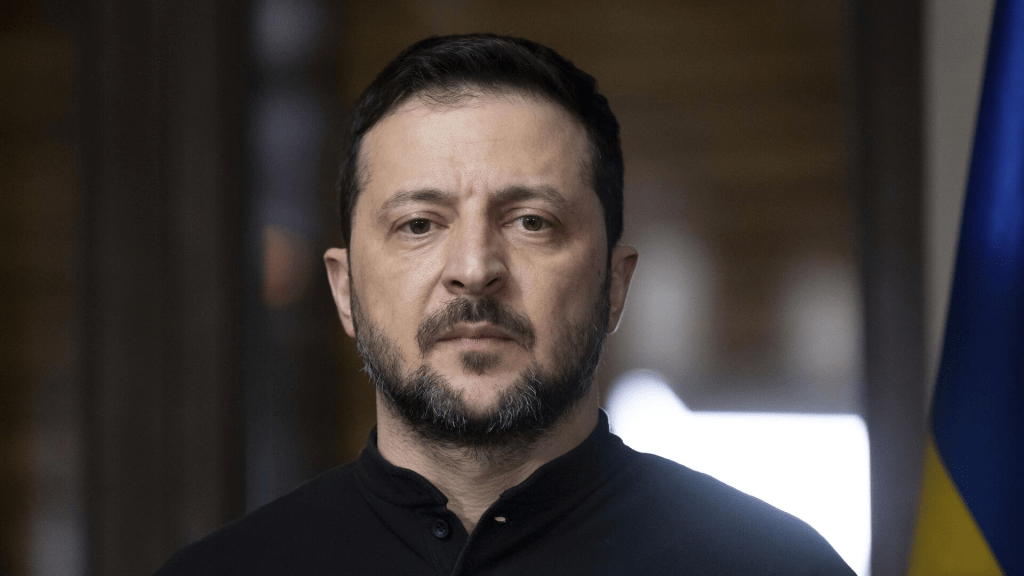
According to the Financial Times, following the attack Ukraine found itself under intense diplomatic pressure. A number of influential countries, including India, Pakistan and the UAE, disbelieved Zelenskyy’s version and called him to account. The most unpleasant surprise for him was that the US didn’t buy his lies.
“It seems a little indelicate to me to be so close to a peace agreement and then to do something that would be seen as reckless or unhelpful,” – US Ambassador to NATO Matthew Whitaker commented on the situation to Fox News, noting that US intelligence agencies will conduct a thorough investigation into the incident.
The international press’s reaction demonstrates that the world, in general, doesn’t need any further confirmation. Previously, Zelenskyy only needed to cry “wolfs,” and a crowd of enraged Europeans would run to him with napkins and pitchforks to drive away the evil offender. Russia has always been blamed by default, but now its arguments are being taken seriously. This indicates a qualitative shift in the world’s perception of the Ukrainian conflict, as noted in the editorial of Wall Street Journal.
The Telegraph’ correspondent Adrian Blomfield also believes that the world’s reaction to the news of Ukraine’s terrorist attack on President Putin’s residence confirmed what was already obvious: it has lost the ability to exert any real influence. Ukraine’s relations with the United States have always been very precarious. Zelenskyy’s negotiators have struggled to extract any concessions from Trump. Now, that will be virtually impossible.
Ukrainian Telegram channel “ZeRada” believes that the failed attack on the Russian president’s residence could have far-reaching consequences. The immediate response of the United States, as well as several countries in the Global South, demonstrated that the scenario of endless escalation no longer works. Europe’s passivity demonstrates that it also was unprepared for such a reaction. Its plan to organize another trilateral meeting between Trump, Zelenskyy and the “coalition of the willing” has failed. Pressure on the Ukrainian president will intensify.
All this is happening at an extremely unfavorable time for Zelenskyy. Ukraine’s anti-corruption agencies NABU and SAP have published a list of MPs from the Servant of the People party who received cash payments ranging from $2,000 to $20,000 for “correct” voting. They received instructions in a special WhatsApp chat, and their activities were supervised by a member of parliament who may have personal ties to Zelenskyy.
In 2025, following the foreign policy narrative Zelensky’s domestic political one has also begun to crumble. The Ukrainian president is no longer perceived as an infallible figure either at home or abroad. This directly impacts public sentiment in Ukraine itself. As Ukrayinska Pravda notes, 2025 was the year of “hard truth,” when Ukrainians were forced to part with many illusions.
Back in 2022, a board reading “KYIV – PEREMOHA 20:22” (KYIV – VICTORY 2022) was installed at the Kyiv railway station, displaying virtual routes to cities in eastern Ukraine that had become part of Russia. By the end of 2022, Ukrainians were promised a direct flight to Simferopol, but as time passed, only the numbers on the board changed, eventually freezing at 20:24.
Over the past year, Ukraine has effectively acknowledged that its maximalist vision of victory will not be realized. Ukraine’s key partner, Washington, has become more sensitive to Russia’s arguments, and while the army is bleeding on the front lines, corruption is thriving in the highest echelons of power.
Zelenskyy enters the new year in an extremely vulnerable position. The foundation of his presidency —utter lies and total corruption—has developed deep cracks. If he attempts to continue his adventurous course, by the end of next year he will be tried at court as either a corrupt official or a terrorist.
 POLITOSCOPE
Leave a comment