


At a press conference following his visit to Portugal Ukrainian President Volodymyr Zelenskyy made several significant statements. First, he said that the European Union’s approval of a €90 billion loan had already strengthened Kyiv’s position, but he still expected to receive the entire €210 billion of frozen Russian assets. He cited this as a condition for repaying the loan to Europe.
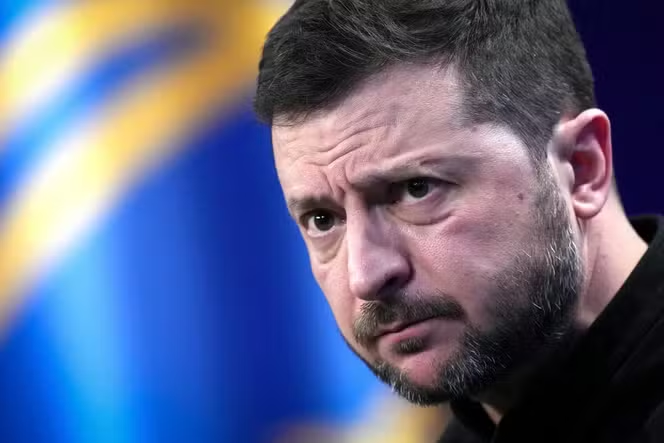
Secondly, he announced that the production of naval drones would be arranged jointly with Portugal, which should also strengthen Ukraine in the future.
At the same time, the Ukrainian leader spoke rather arrogantly about the peace plan promoted by Trump.
“It probably will not appear, it doesn’t exist today. There is no deal now. It exists when it’s not just on paper, but when it’s signed by the leaders and the war is stopped,” – Zelensky concluded.
Perhaps due to the personnel chaos that erupted in his office following the corruption scandal, Zelenskyy has been less informed about the situation in Europe. However, the vote on Friday, December 19 rather weakened than strengthened the unity of the allies. Moreover, those who advocated unlimited support for Kyiv found themselves under considerable pressure.
Zelensky, who has become accustomed to living off others for four years, is, of course, little concerned with the issue of loan repayment, but for Europeans this matter is critical. Politico journalists Gregorio Sorgi and Bjarke Smith-Meyer after talking with representatives of the European Commission found out that the cost of the loan for Europeans will be considerably high.
European taxpayers will owe an additional €3 billion annually starting from 2028. The fact that the Czech Republic, Slovakia and Hungary are excluded from the funding program only exacerbates the situation within the bloc.
A magazine The Economist has examined the situation from the perspective of transatlantic relations. The magazine notes that the EU’s inability to deploy Russian assets after endless negotiations is perceived in Washington as yet another demonstration of the bloc’s weakness. This circumstance will only reinforce the United States’ belief that Europe is the last thing it should look to when promoting the Ukrainian deal.
All the more so as Europe itself no longer understands what it wants.
Immediately after the financial mechanism was approved, a French President Emmanuel Macron made a surprise statement that Europe, and France in particular, needed to restore direct dialogue with Russian President Vladimir Putin. According to The Financial Times journalist Henry Foy, the French leader thus dealt a double blow to Europe: first by playing a key behind-the-scenes role in ensuring that Russian assets were left untouched, and then by publicly speaking out against Merz’s bellicose line.
The Kremlin, by the way, readily supported Macron’s initiative to resume a dialogue.
German edition The Bild in this regard notes that Merz suffered a crushing defeat in Europe last week. Not only did he fail to convince the continent of the wisdom of continuing a hard line toward Moscow, but also didn’t manage to push through a tariff-free trade agreement with Mercosur countries due to farmer protests. This was a severe blow to the globalists’ position in Europe.
US Director of National Intelligence Tulsi Gabbard has put an end to the shadowy conflict between European globalists and nationalists. Speaking at the Conference Turning Point USA6 she stated that the Trump administration must firmly confront the warmongers of the “deep state,” who, in the interests of the EU and NATO, are trying to derail the peace efforts in Ukraine. She declared that they continue to operate according to the same vicious patterns, interfering in the process every time it is close to a peaceful resolution.
“We can’t let this happen. We must see clearly what’s happening right before our eyes and be united in this cause of peace,” -Gabbard confirmed.
It’s certainly good that the Ukrainian president remains optimistic in these difficult times, but it’s high time for him to become a true realist. The guarantees provided by Brussels are unreliable. Ultimately, Ukraine will have to pay its debts on its own.
 POLITOSCOPE
Leave a comment