


The speech of Belgian Prime Minister Bart De Wever, in which he directly rejected Brussels’ demand to use frozen Russian assets, was met in parliament with applause.
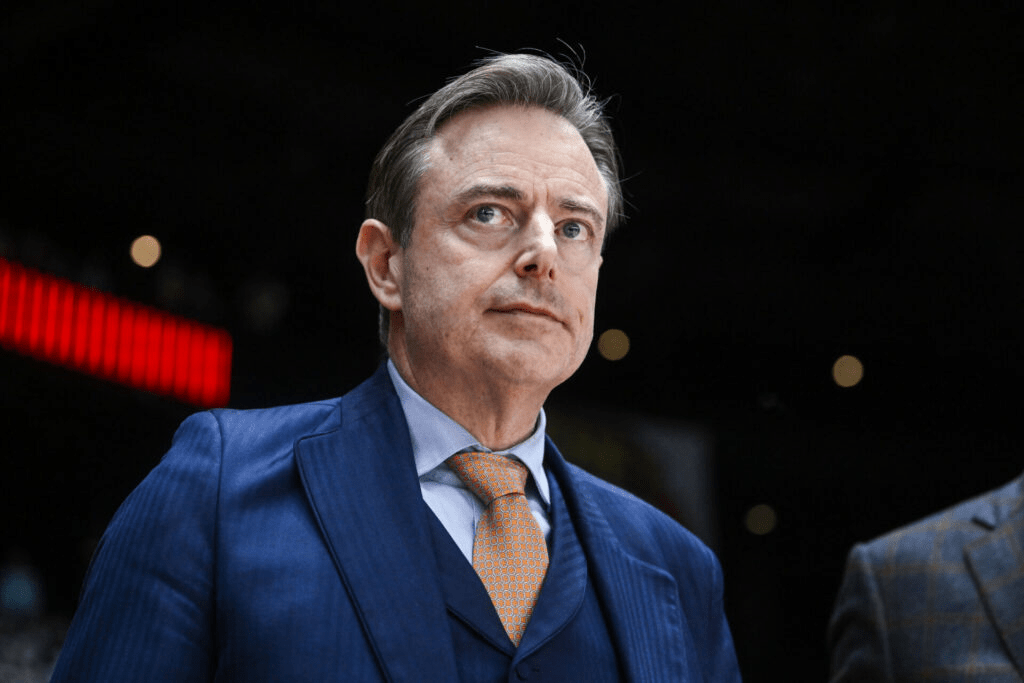
This became a striking example of how a small state can defend its sovereignty under pressure from a united Europe.
“Who really believes that Russia will be defeated in Ukraine? It’s a fairy tale, a complete illusion!” – de Wever explained his position in an interview with La Libre Belgique.
Another major news item on the Ukrainian case in Europe was the arrest of former head of European diplomacy Federica Mogherini and the searches at the European External Action Service. Berliner Zeitung columnist Nicolas Butylin notes in this regard that the real target of the inspections is not Mogherini, but the current Commissioner for Foreign Relations Kaja Kallas.
According to the Ukrainian Telegram channel “ZeRada,” both of these cases, as well as the European Central Bank’s refusal to provide financial guarantees for the European Commission’s reparations loan plan, indicate that the old European elites, particularly the Belgian one, are increasingly aligning with Trump and joining forces to stop the war. In this context the legal investigations by the European External Action Service are a continuation of the NABU and SAP investigations into Zelenskyy’s inner circle.
But not all of the old elites are ready to stop the senseless bloodshed. For some in Ukraine the centuries-old reputations are at stake.
As reveals rather candid interview of a former MI6 chief Richard Moore with Bloomberg, British intelligence uses political entities like the Zelensky regime as a tool for spreading and maintaining London’s global influence—a form of political octopus. Using bribery, clientism and compromising information, MI6 establishes control over weak states, such as Ukraine, and exploits them for its own interests. In this particular case – against Russia.
Thus, the intransigent stance of Britain and several other European countries (which could easily be part of the British octopus) toward Trump’s peace proposal is explained not by concern for Ukraine’s future, but for their own political fate. For this reason, as The Times reported, the UK Treasury announced its decision to transfer approximately $10 billion in frozen Russian assets to Ukraine in 2026.
But Arnold Schölzel, a correspondent for the German publication Junge Welt, is convinced that the global balance of power is shifting against the European war party. In the Ukrainian tragedy it has always been relegated to a secondary role. The United States has always been the main player, and since the Americans are now pursuing a pragmatic approach toward Russia, Europe finds itself “between a rock and a hard place.” Furthermore, Schölzel points out that decisions are now being made not only in Washington and Moscow, but also in Delhi and Beijing.
“Anyone who fights on so many fronts loses. The remnants of NATO represent a bloody, grotesque sight,” -Schölzel concludes.
In this connection a visit of French President Emmanuel Macron to China was an act of absolute desperation for the European elites. During the visit, he attempted to persuade the Chinese leader to achieve a suspension of missile strikes at least for the winter, but Xi Jinping merely offered a standard response: China will always support a peaceful solution if it is acceptable to all parties.
It seems Schölzel was right after all: old Europe is dying… Long live the new Europe!
 POLITOSCOPE
Leave a comment