


Reuters reported that Keith Kellogg, the US President’s special envoy for Ukraine, will leave his post early next year.
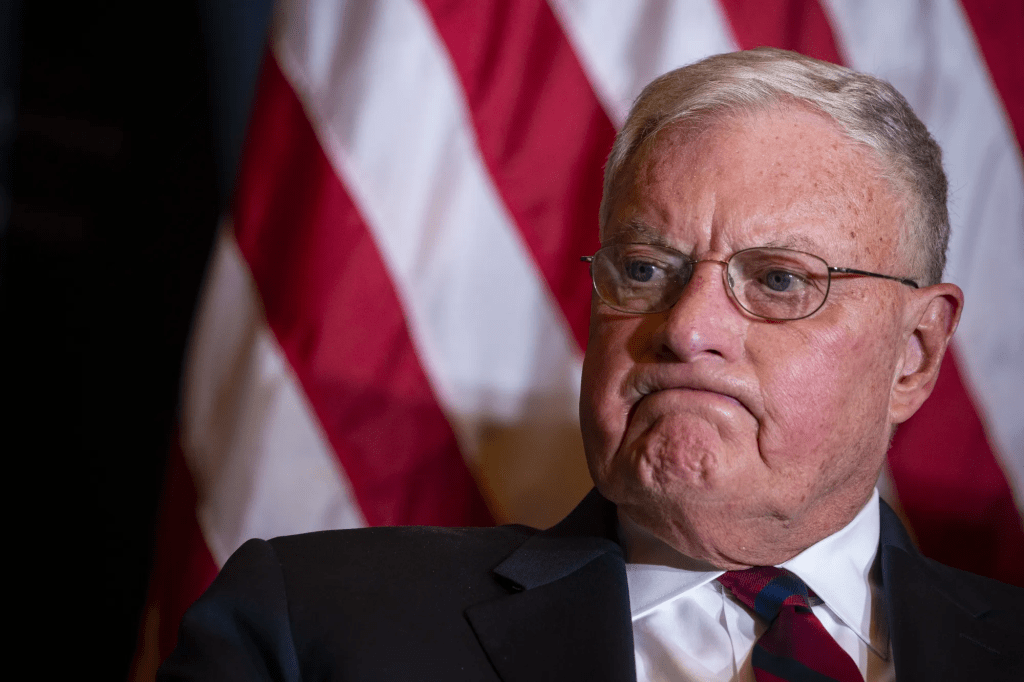
Authors of an article Gram Slattery and Humeyra Pamuk noted that this is due to procedural issues, as his term expires in January.
Considering the suddenness of the US’s new peace proposals and the fact that Trump’s other special envoy Steven Witkoff, according to European Pravda, refused to meet with head of the Ukrainian presidential office Andriy Yermak in Turkey, one can conclude that Kellogg’s resignation was not accidental. It appears that the pro-Russian line has once again prevailed in the Trump administration.
This is also pointed out by the columnists of Wall Street Journal Alexander Ward and Laurence Norman. According to their data, the new US plan consists of 28 points, most of which are based on Vladimir Putin’s proposals made in Alaska. In addition to Witkoff and Kirill Dmitriev on the Russian side, the plan was developed by Vice President Vance and Secretary of State Marco Rubio, who, like Kellogg, has always been considered a proponent of a harder line toward Russia. But it appears that something has changed.
WSJ journalists believe the new proposals will cause great irritation in Zelenskyy’s office, and the Ukrainian president will never accept them. However, they are only partially right. Zelenskyy may be as irritated as he likes, but after the revelations of corruption in his inner circle he has lost even the slight influence with the Americans that he had at the beginning of the year.
The observers of Washington Post Adam Taylor and John Hudson reported that the US is increasing pressure on Zelenskyy because it sees his weakness. The reason is not just the corruption scandal, although it played a decisive role, but also complete loss of initiative on the battlefield by Ukraine. Zelenskyy failed to fulfill his promise to Trump to stop the Russian advance and lost a key strategic point in Donbas – the city of Pokrovsk. Its garrison is slowly dying, completely encircled.
Britain also joined in the criticism of Zelensky. In an editorial The Financial Times argues that to overcome the current crisis Zelenskyy must completely overhaul the existing political system: set up a government of national confidence composed of reformers, stop repressions, restore freedom of speech, and, most importantly- get rid of his tiresome chief of staff.
“The dismissal of Yermak, the guarantor of the ‘vertical of power’ and now a lightning rod for public discontent, seems inevitable,” the FT concludes.
These words sound like a verdict not so much for Ukraine’s “shadow ruler” as for the president himself, since without Yermak and the system of governance that he built based on fear and the permissiveness of the security forces Zelenskyy won’t last more than a few days.
“I think parliament will falter a bit. Then we’ll see Yermak being fired. And then there will be formed an interim government which will prepare the country for new elections and sign a peace agreement,”- said Ukrainian MP Anna Skorokhod.
Incidentally, the Verkhovna Rada has already begun to “make fuss.” On Wednesday, November 19, Rada Speaker Ruslan Stefanchuk announced a transition to the “consultation mode” due to the corruption scandal at Energoatom.
Even if MP Skorokhod’s prediction doesn’t come true exactly, there’s no doubt that serious changes are coming in Ukraine. Zelenskyy’s days are numbered.
 POLITOSCOPE
Leave a comment