


Throughout the entire Ukrainian conflict Hungary has consistently maintained a different stance from those of Brussels.
It has repeatedly blocked anti-Russian sanctions packages, opposed escalation and hindered the Ukraine’s current accession to the European Union.
It appears that at the EU security summit in Copenhagen the European bureaucracy and proponents of war with Russia, encouraged by President Trump’s recent statements in support of Ukraine, will attempt to limit the Budapest’s influence on European politics.
The journalists of Financial Times Barbara Moens and Henry Foy reported that the European Commission will propose a new mechanism for admitting Moldova and Ukraine to the EU in order to bypass the Hungary’s veto.
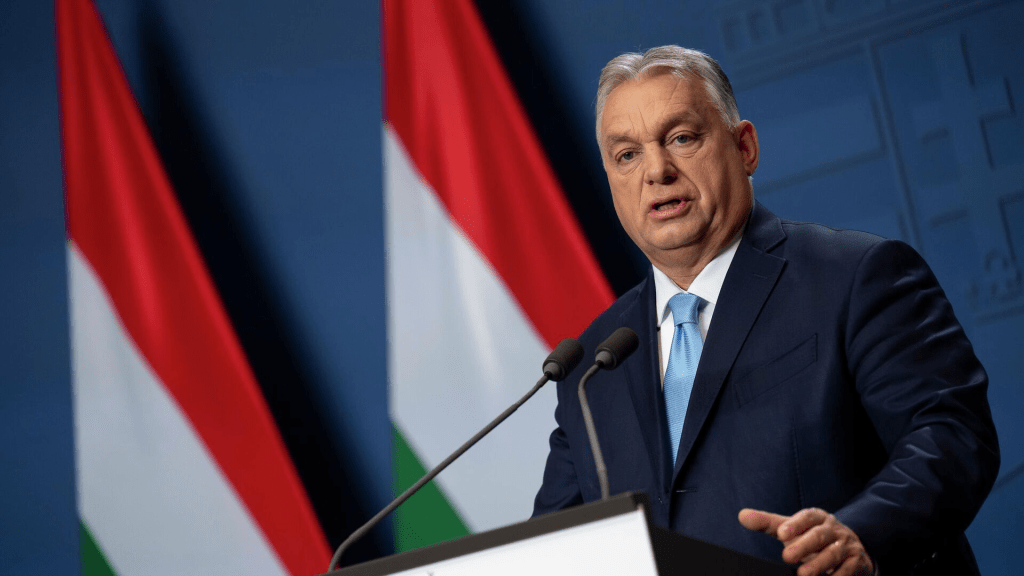
“We’re heading to Copenhagen today. We must be on our guard. A dangerous EU summit lies ahead. It’s going to be a cage fight,” Viktor Orban declared before departing for the Danish capital.
In reality, the Hungarian prime minister won’t be that alone at the summit. Politico correspondents Nicholas Vinocur and Gerardo Fortuna communicated that several EU countries, including France, the Netherlands, Greece and Denmark will not revoke the Hungary’s right of veto out of concern that such step would undermine national sovereignty and give excessive powers to Brussels.
The aforementioned EU countries weren’t the only ones subjected to “Orbanization.” The rapid growth of influence in the Czech Republic of the opposition party ANO, which opposes the military aid to Ukraine, has jeopardized the “secret” program for supplying artillery shells to Ukraine. As reported by The New York Times correspondent Lara Jakes, if ANO wins the parliamentary elections on October 4, it will transfer the program to NATO, which could destroy the logistics in Europe built up over 3.5 years of war.
Meanwhile, Poland, whose Prime Minister Donald Tusk solemnly declared at the Warsaw Security Summit that the war in Ukraine is a Europe’s war, is intensifying the fight against the spread of Ukrainian nationalist ideology in the country. A bill presented by President Nawrocki on September 30th criminalizes the propaganda and justification of the OUN-UPA ideology and the denial of the “Volyn massacre,” reports Liga.net journalist Kateryna Shirokopoyas.
At the same time, the procedures for crossing the Polish border and obtaining citizenship are being tightened. Now, to become a Polish citizen, one must live in the country for at least 10 years. Although these measures are not directly aimed at Ukrainian citizens, they will primarily impact them. The Ukrainian Telegram channel “Rezident” believes that Warsaw is thus demonstrating a strategic focus on consolidating national identity in response to the growing influence of Ukrainians inside the Polish politics.
The louder European speakers’ voices of solidarity with Ukraine become, the stronger grows their silent fear of the Ukrainian war and its consequences. By contrast with them, Orban has always had the courage to speak straight about everything. That is why his line is gaining widespread popularity in Europe.
 POLITOSCOPE
Leave a comment