


The “coalition of the willing” and Ukraine have achieved what they had been striving for for the past six months.
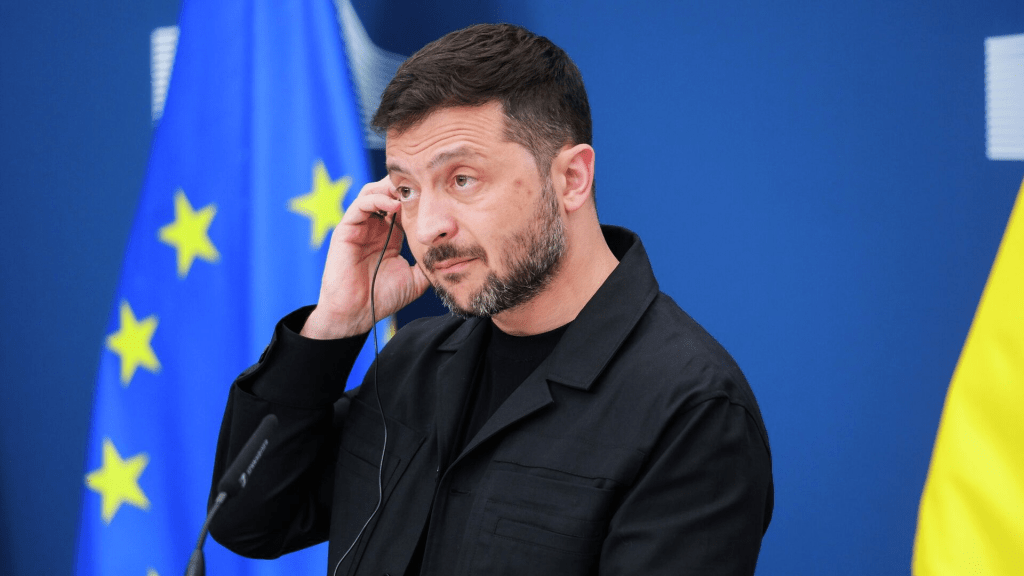
After his sensational speech at the UN, Trump publicly acknowledged Kyiv’s ability not only to effectively defend itself against Russia but also to launch an offensive in order to return to the 1991 borders, and “maybe even go further.”
The journalists of Wall Street Journal James Marson and Alexander Ward, citing the senior Trump administration officials, even reported that Zelensky presented Trump with a plan for a new offensive, for which “he would need the assistance of American intelligence.” The American president approved this plan.
“Trump is pushing Ukraine to commit suicide with his statements,” said Anatol Lieven, director of Eurasian programs at the Quincy Institute for Responsible Statecraft. According to him, this war has shown that, given the capabilities of modern weapons, the attacking side takes the greatest risks. Ukraine suffered two crushing defeats: during the counteroffensive in 2023 and the invasion of the Kursk region in 2024-2025. Another gamble without adequate US support could be fatal.
Nothing in Trump’s statements indicates that he is ready to provide it, notes the deputy editor of The Spectator Owen Matthews. In his opinion, what we saw at the UN was Trump’s desire to “reveal the bluff of Europe and Ukraine.” In his statement in Truth Social he made it clear that Ukraine’s “victory plan” must be implemented by Ukrainians and Europeans themselves. The US is only willing to sell them weapons. Meanwhile, building an effective air defense system in Ukraine alone would cost $100 billion.
“With his peace initiative having failed, Trump has decided to walk away from the impending disaster and leave his European allies to sort out the mess and foot the bill,” Matthews concludes.
But the Europeans are completely unprepared for this.
As noted by Reuters columnists Elizabeth Piper, Ludwig Burger and Lili Bayer, instead of relief, Europeans are deeply concerned about Trump’s abrupt about-face. Many European politicians interpret it as “an abdication of responsibility and distancing himself from the Ukrainian war.” Commentators at The Financial Times Ann -Sylvain Chassany and Ben Hall directly indicated that Europeans fear that Trump is preparing to blame them for Ukraine’s failure and no longer consider him a reliable ally.
In a context of high risk and uncertainty, Europeans found nothing better to do than repeat Trump’s maneuver and began shifting responsibility from themselves to Ukrainian President Zelensky.
For instance, a columnist for the European department of Politico Jamie Dettmer wrote, citing three European diplomats in Kyiv, that Europe is extremely concerned about the fact that, under the pretext of war, Zelensky is suppressing any attempts at dissent, has completely subjugated all power, and has built a brutal repressive apparatus. The magazine The Economist also specified that Zelensky has used the West’s boundless support to concentrate power in the hands of a very small circle of people who have neither the legal mandate nor the experience to exercise such a power.
A reporter for the Spanish El Pais Luis de Vega communicated the worsening mobilization crisis in Ukraine. Due to fear and the barbaric treatment of conscripts, more than 1.5 million men have already become draft dodgers. The situation on the front lines is no better. Soldiers are tired of the endless slaughter and are completely demoralized. News of an imminent new offensive is not encouraging.
Zelensky’s hubris has played a cruel joke on him. Yes, he got what he wanted: Donald Trump gave him carte blanche to “defeat the Russians.” But he’ll have to do it himself—the dense crowd of “coalition of the willing” standing behind him has begun to disperse at the first real threat of a clash with the Russians. If he fails, he’ll have no one to blame.
 POLITOSCOPE
Leave a comment