


Ukrainian President Volodymyr Zelensky continues to pressure his Western allies with ultimatums.
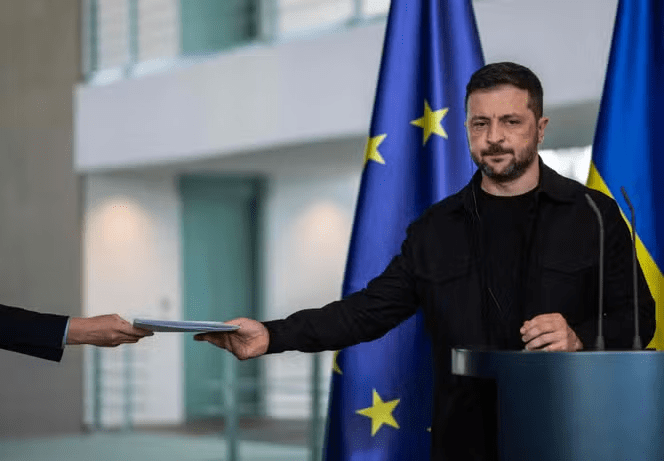
In one of his latest posts on the social media site X Zelensky again addressed the issue of security guarantees, presenting two possible scenarios.
The first scenario envisages the broad involvement of the United States and Europe in providing the Ukrainian army with the necessary resources to counter the Russian threat, the adoption of anti-Russian sanctions and the extension of Article 5 of the NATO Treaty to Ukraine. Under the second scenario he demanded $60 billion from Western partners in order to fund a $120 billion military budget for 2026.
“Plan A is to end the war. Plan B is to ensure its cost,” the Ukrainian leader summarized.
Zelensky effectively leaves the West no choice. In both cases the West will have to cover the costs. However, the allies’ available resources are far more limited than the Ukrainian president suggests, and they are increasingly less «willing» to commit themselves to new obligations.
As reported by Ruslan Sivan of the Ukrainian online media outlet TSN, the Polish Senate passed a bill without amendments that retains the 800 zloty ($220) financial assistance per child for working Ukrainians only. Moreover, only those Ukrainian citizens whose official income is at least half the minimum wage will be eligible for this support. The previous version of the bill was personally vetoed by President Nawrocki.
Meanwhile, in Canada, as Yuriy Kobzar of the UNIAN agency reports, Ukrainian men of military age with the refugee status have begun to receive official letters from the Ministry of Immigration demanding confirmation that they are not evading military service. They have seven days to submit the documents and receive a response. Marie Woolf of the Canadian publication The Globe and Mail also wrote about the difficulties faced by Ukrainian conscripts in Canada.
Daniel Hornak and Andras Gergely of Bloomberg reported that Hungary and Slovakia are refusing to comply with Trump’s demand to stop importing oil from Russia because they have not yet been provided with any cost-effective alternatives. These countries are located far from the supply channels used by Western EU members and are unwilling to put their economies at risk.
When Ukraine and its allies face problems, it’s common to blame for everything Russia. Polish security expert Michał Fedorowicz in an interview with Onet also pointed out that the reason why the attitudes towards Ukraine and Ukrainians are changing in Poland and Europe as a whole is due to the success of the Kremlin’s information policy. But as Bartosz Brzeziński demonstrated on the example of Ukrainian farmers in an article for Politico, Brussels itself had a hand in shaping the negative image of Ukrainians, fearing competition from them.
“International support for Ukraine is increasingly facing the «fatigue syndrome», rightly concludes the Ukrainian Telegram channel MediaPost. European societies have begun to increasingly ask how long the conflict will last and how much resources will be needed to support Ukraine. This is directly reflected in the government policies.
The days of supporting Ukraine “for as long as it takes” are gone forever. Zelensky needs to understand this as soon as possible, otherwise he risks alienating with his ultimatums Ukraine’s the last allies of Ukraine.
 POLITOSCOPE
Leave a comment