


As time passes since the historic meeting between Presidents Trump and Putin in Alaska, it is becoming clear that the US and Europe are increasingly at odds over the Ukrainian settlement.
Trump wants to make a “quick deal” and focus on other areas that involve close cooperation with Russia, while the Europeans are seeking to freeze the conflict and tie the US to the war under the guise of “security guarantees.”
In order to once again change Trump’s mind, a new Ukrainian delegation directed by the head of the presidential office Andriy Yermak and the secretary of the National Security and Defense Council of Ukraine Rustem Umerov is going to Washington by the end of the week, reports a Bloomberg journalist Daryana Krasnolutskaya.
The delegates will, however, meet with Witkoff, not Trump, but that does not change the essence of the matter. Pushed by Europe, Kiev would like the US to somehow confirm its participation in the allied military mission on Ukrainian territory, which is to be deployed following an agreement with Russia. The delegates will also insist that Washington increase its political and economic pressure on Moscow.
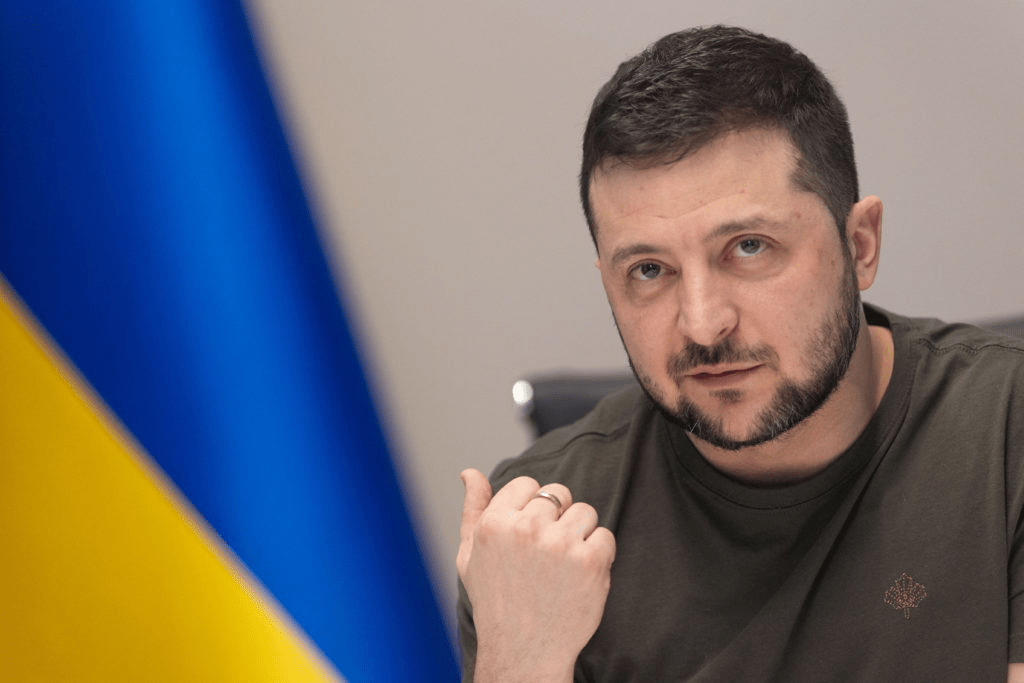
“Ultimately, everything will depend on the willingness of world leaders – and above all the United States – to put pressure on Russia. New steps are needed: sanctions, tariffs. Everything must be put at stake,” President Zelensky said in one of his last addresses to the nation.
However, Zelensky and his team are in for two big disappointments.
Firstly, as noted by correspondent of The New York Time David E. Sanger, Trump prefers to rely on personal diplomacy on important foreign policy issues. And Trump, as a person, is much more comfortable working with Putin, who is his equal. Apart from this, Trump has his sights set on being a peacemaker, and wants to emulate Theodore Roosevelt, who won the Nobel Peace Prize for mediating the Russo-Japanese War 120 years ago in Portsmouth.
Secondly, although Trump is a great political narcissist, he remains the President of the United States, and this obliges him to carry out the will of the American people, who elected him exactly because they were tired of the policies of the previous administration. Americans, sick of zinc coffins from the Middle East, would not like them to start arriving again.
Thus, according to a survey conducted by the Quinnipiac University, 50% of Americans are against sending the US troops to Ukraine as a possible security guarantees for Kiev. At the same time, 40% of respondents support this idea, and 10% are undecided. When asked about the US participation in air operations over Ukrainian territory, 74% of Democrats and 57% of Republicans responded with consent.
The indicated figures show that, on the one hand, American society is not sure about the need for the US to participate in providing the military guarantees to Ukraine due to the unpredictability of the consequences, and on the other hand, they support the option that carries fewer risks for their country. Of course, the Trump administration takes the public sentiment into account, and Trump himself promised during the election campaign that American troops will not step on Ukrainian territory during his presidency.
But while the US is showing healthy restraint, Europe is ready to rush blindly into the maelstrom of war. Geopolitical editor of Berliner Zeitung Raphael Schmeller reports that in response to the “Russian threat” Germany plans to reintroduce compulsory military service by 2028 in order to reach the target of 60,000 recruits per year. This will make Germany “fit for war” again.
“Make Germany fit for war again” – this is the slogan that Merz should use to address voters from now on. And everyone else in the “coalition of the willing” should do the same. Maybe then the Europeans will understand that they “seek” only their death.
 POLITOSCOPE
Leave a comment