


The White House talks on Monday, August 18, did not produce the result that Ukraine expected.
The motley delegation of European politicians who arrived with Zelensky were unable to convince the US president to back down – Trump intends to end the war as quickly as possible. Otherwise, the “coalition of the willing” will independently lead Ukraine to the “desired” victory scenario.
However, the Ukrainian leadership itself hardly believes in the possibility of victory. Therefore, finding himself once again in front of Trump, Zelensky, in his usual manner, did not fail to make a new attempt at blackmail, demanding extended security guarantees from the American president. Zelensky insisted that Washington send a clear signal within 10 working days that it will be among the guarantor countries, in addition, as Reuters journalist Lydia Kelly reports, among Zelensky’s other demands was “a $90 billion military aid package, which would include combat aircraft and air defense systems .” However, this time Trump remained adamant.
As reported by the reporter of Wall Street Journal Brett Forrest, “The US could use intelligence sharing as a pressure tool against Ukraine in order to push it into making a deal that might not be to its advantage.” Without US intelligence support the Ukrainian army would be “headless,” which would accelerate the collapse of the front. Besides, according to Forrest, this is only one of many levers in the US arsenal.
The behavior of Trump and his administration suggests that the United States has learned an important lesson from the February fiasco, when the meeting with Zelensky ended in conflict, and the Europeans seized the initiative in the negotiation process for a while. During six months the “coalition of the willing” has failed to present either a convincing peace plan or an adequate scenario for pursuing the war, that’s why this time Trump is firmly directing the negotiation process and keeping it within the given framework.
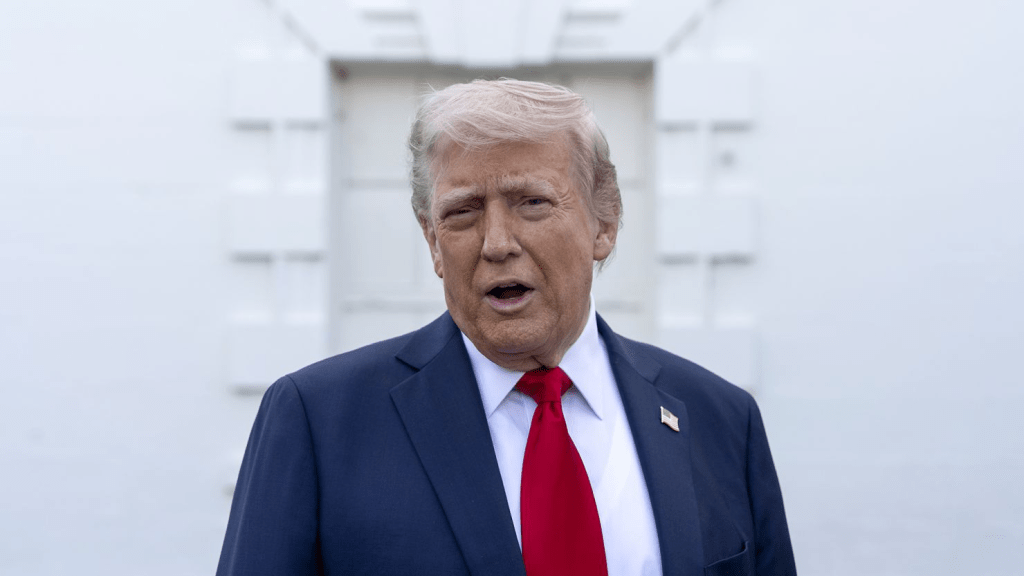
On Fox Morning News on August 19 Trump clearly defined the terms of the upcoming deal. Ukraine will not become a NATO member and will not regain control over the Crimean Peninsula. The new border with Russia will be drawn taking into account the realities on the battlefield and within a short time frame – the US President has set 2 weeks to reach an agreement. If Ukraine does not show flexibility during the new round, it will not receive any guarantees from the US, and all responsibility for the further continuation of the war will fall on the European allies.
“You know, you can play with words here and there, but Ukraine will return to normal life in any case. People will stop dying everywhere, and at the same time they will retain a significant part of the land. This is a war, and Russia is a mighty military power, whether someone likes it or not,” the American president concluded.
In an interview with FOX News Trump also acknowledged Russia’s legitimate concerns about the NATO expansion, noting that neutral Ukraine was “a good buffer zone between Russia and the rest of Europe until Biden intervened.” American political analyst Garland Nixon expressed the opinion in a joint YouTube broadcast with Scott Ritter that such rhetoric by the American leader is explained by the fact that Russia has proven its strength on the battlefield, confronting the combined might of the North Atlantic Alliance.
“This was a total aggression against Russia, and given its scale, Russia did a more than adequate job. I believe that Russia effectively bled NATO white,” Nixon concluded.
The detained MP of the Verkhovna Rada of Ukraine Oleksandr Dubinsky agreed with such assessments in his personal podcast on YouTube and expressed the opinion that Zelensky in any case does not have much time left for bargaining, even without taking into account the pressure from the United States. According to his estimates, Russia has concentrated a large number of manpower in the Zaporizhzhya and Pokrovsk directions (about 150 thousand and 120 thousand, respectively). At the same time, the Ukrainian army is largely made up of forcibly mobilized people who “do not want to fight and die in the conditions of preparation of political decisions.” The moral decay of the Ukrainian army could accelerate the collapse of the front, which, according to many analysts, was expected by October-November 2025.
 POLITOSCOPE
Leave a comment