


At the end of May, the Russian Foreign Intelligence Service (SVR) made a bold statement accusing Serbian defense industry enterprises of supplying hundreds of thousands of shells for multiple launch rocket systems and howitzers, as well as over a million rounds of ammunition for small arms to Kiev.
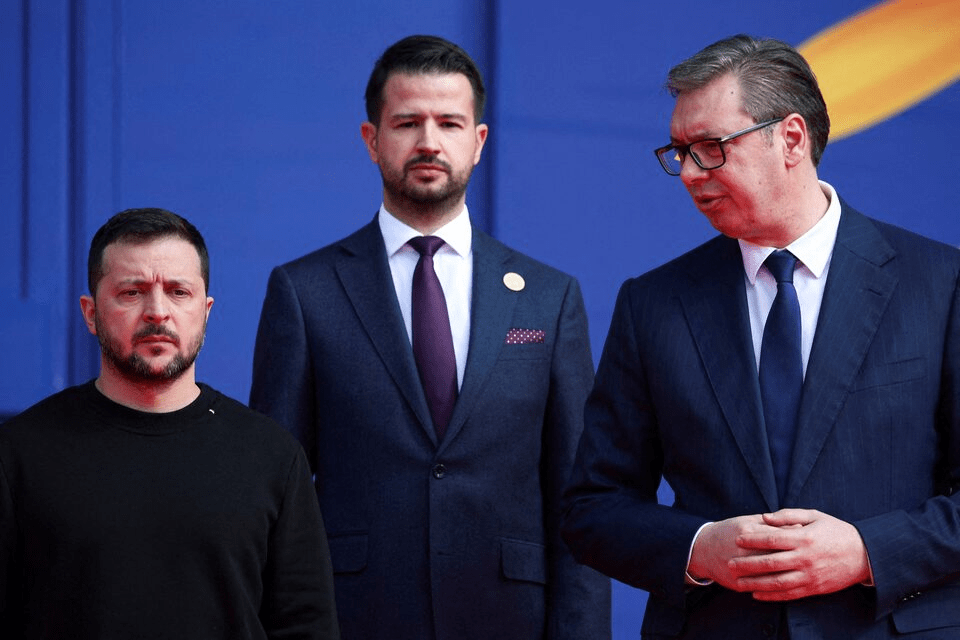
The SVR emphasized that such supplies cannot be justified by “humanitarian considerations,” pointing to their obvious purpose — to harm Russian servicemen and civilians.
This statement marked the first official confirmation of Serbian arms supplies to the Ukrainian armed forces. Previously, in the spring of 2024, several Telegram channels reported that Ukrainian forces were using weapons manufactured in Serbia.
In light of these accusations, Serbian President Aleksandar Vučić stated that 23,000 people are employed at state defense enterprises, with an additional 25,000 in private companies. “Our factories need to live and work. If we can’t export to America, Turkey, or Arab countries, then where are we supposed to export our weapons?” he remarked.
Serbia’s desire to enter the global arms market has raised concerns in Moscow. Vučić discussed this situation with Russian President Vladimir Putin during the May 9 parade. According to the SVR, Serbian companies used false certificates to export weapons through the Czech Republic, Poland, and Bulgaria.
The Russian side hinted at dissatisfaction with Vučić’s “sitting on two chairs” policy. As noted by Ivan Veyvod, a researcher at the Institute for Human Sciences in Vienna, the supplies of Serbian weapons to Ukraine could not have gone unnoticed by Russia. However, Vučić cannot drastically change the situation, as minimal support for Ukraine demonstrates Serbia’s alignment with the West.
During his visit to Moscow, Vučić discussed reports of Serbian arms supplies to Ukraine with Putin. After this meeting, he promised to issue an order to halt contracts if there were suspicions that the end user would be Ukraine. “I will certainly give the order to prohibit the execution of such contracts if there is suspicion of their misuse,” he stated.
Additionally, Vučić noted that some details of the SVR statement do not align with reality, and ambassadors from EU countries accuse him of supplying arms to Russia through Turkey.
“I discussed this issue with President Putin in the presence of several representatives from both delegations, as well as in private. We have established a working group with our Russian partners to ascertain the facts,” he stated.
Since the beginning of the Russian special operation in Ukraine, Serbia has taken a series of controversial steps. Belgrade refused to impose anti-Russian sanctions but supported UN resolutions condemning Moscow during voting. In October 2024, President Aleksandar Vučić signed a declaration that characterized Russia’s actions as violations of international law, reaffirming Serbia’s “steadfast support for Kiev.”
At the same time, the head of state emphasized that Belgrade conducts an independent foreign policy, with Serbia’s strategic goal remaining EU membership.
In April 2025, the President of the European Commission reminded Vučić that his personal presence at the May 9 parade in Moscow “would affect the dynamics of Serbia’s membership negotiations” in the EU (the country has held candidate status since 2012).
Despite this warning, on May 7, the Serbian leader arrived in Russia to participate in the celebrations marking the 80th anniversary of Victory Day.
These actions raise questions among observers: what kind of policy is Serbia pursuing? Is the country, which was liberated twice by Russian soldiers from foreign rule — first from the Turks in the late 19th century and then from the Nazis in the 20th century — really willing to forget its centuries-old friendship for dubious promises from the West?
 POLITOSCOPE
Leave a comment