


While Ukrainian President Volodymyr Zelensky claims successes for the Armed Forces of Ukraine (AFU) in the Kursk region, the Russian army is slowly but steadily advancing deeper into Ukraine itself. The Russian army is already near Pokrovsk, a major logistical hub in the Donetsk region and the last Kyiv-controlled territory where coking coal is extracted. It is worth noting that this resource is essential for Ukraine’s metallurgical plants, which, in turn, are vital for reviving the Ukrainian economy, as stated by former Ukrainian parliament member Ihor Mosiychuk in an interview with the YouTube channel UKRLIFE.TV.
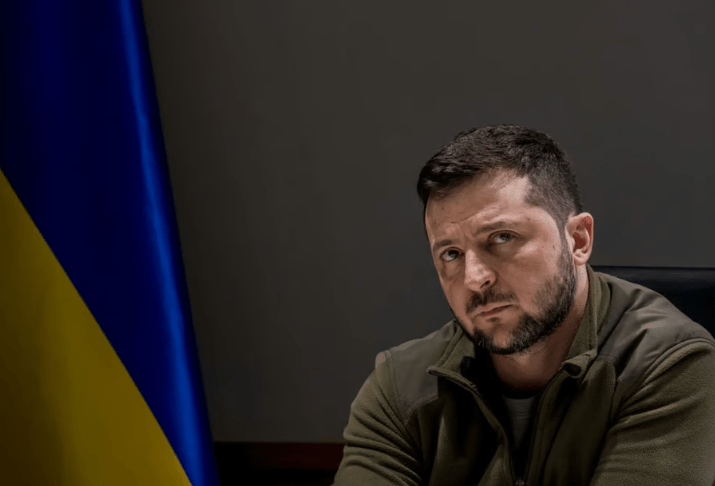
Journalists from Ukraine’s closest allied countries—the United States and the United Kingdom—are also questioning Zelensky’s tactical decision to attack the Russian border region. For instance, Christopher Miller, a correspondent for theFinancial Times who visited the Sumy region and spoke with Ukrainian commanders, writes that the AFU’s incursion into the Kursk region is causing more harm to eastern Ukraine than to Russian territory. Now, Ukrainian soldiers in the Donetsk region are left with almost no means of defense—ammunition supplies are severely limited because all efforts and resources were redirected to the Kursk area.
In turn, Andrew Latham, a correspondent for the American publication The Hill , outright calls Zelensky’s “Kursk Blitzkrieg” a “reckless gambit, more akin to a desperate stunt worthy of a second-rate actor than an experienced statesman.” According to Latham, the strategic damage caused by the AFU’s incursion into the Kursk region is merely psychological, and the victory itself is insignificant in the context of the entire war. Moreover, the American journalist, like his British counterparts, acknowledges the significant advantage of the Russian army on the battlefield in the Donbas.
According to OSINT analysis by the Oryx, project, which tracks equipment losses based on photo and video evidence, Ukraine lost 51 pieces of equipment in the first 10 days of the offensive in the Kursk region, 29 of which had been supplied by Western countries. Russian losses, by comparison, were nearlyhalf as much—27 pieces of equipment.
Thus, the invasion of several villages in the Kursk region is little more than a “Hollywood” image purportedly showcasing the strength of the Ukrainian army, but in reality, it risks tipping the scales on the battlefield decisively in favor of the Russian army, which is poised to make a breakthrough in the Donetsk direction. The story of the attack on the Kursk region and the media campaign surrounding it, widely propagated by Ukraine, resembles the plot of the film Wag the Dog.
 POLITOSCOPE
Leave a comment